On the roof
The covering, valley and eave details direct water toward the collection edge. A defect upstream can leak before water ever reaches the gutter.

A gutter catches water only when the roof sends water into it. The eave covering, edge flashing, fascia, gutter and outlet form one route, and a failure at one part can look like a problem with another.
Overflow over the front of a gutter can point to debris, pitch or outlet capacity. Water behind it can point to a problem with the roofing edge or flashing connection. Replacing the gutter without checking the eave can leave that second route open.
The work needs to account for the support too. Deteriorated fascia or decking is not restored by fastening a new gutter over it. The roof-edge repair and the gutter scope should describe how they connect.
Discuss the gutter and roof edge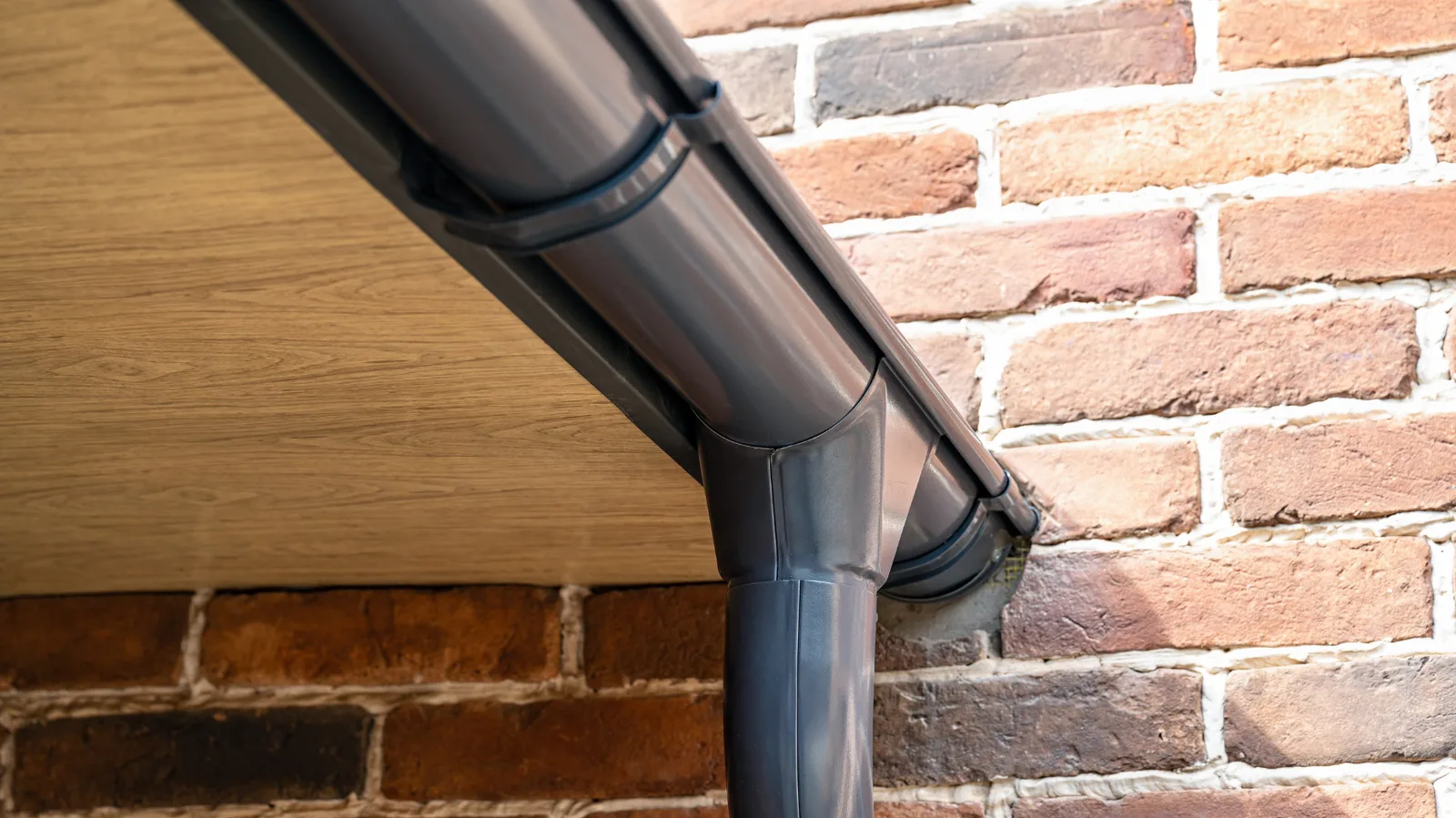
A working gutter is only part of the route off the building.
The covering, valley and eave details direct water toward the collection edge. A defect upstream can leak before water ever reaches the gutter.
Supports, pitch, joints and outlets must suit the run and the roof area being collected.
The downspout and downstream drainage path need to move water to a suitable outlet, without leaving it against the building or directing it onto a neighbor.
If water is spilling, gathering beside a wall or showing up indoors, the roof drainage planner helps organize that observation. It does not ask you to diagnose the roof.
Tell Liberty Roof Pros what you have noticed at the property. A free inspection puts the roof edge and its connections into the repair conversation.
Tell us where water is going at the Liberty property. Request a free roof inspection.
Liberty Roof Pros