At the surface
Debris, covering damage and open flashing can redirect water before it reaches an outlet.

A practical way to organize a roof drainage concern before an inspection.
Free roof inspections. Repairs, replacements and commercial roof help.
Choose the roof type and what you have noticed to understand which parts of the water path need attention. You can use what you already know from the ground or inside the building.
The result explains what your observation changes in an inspection conversation. It keeps a gutter symptom, a roof low spot and an indoor leak from being treated as the same problem.
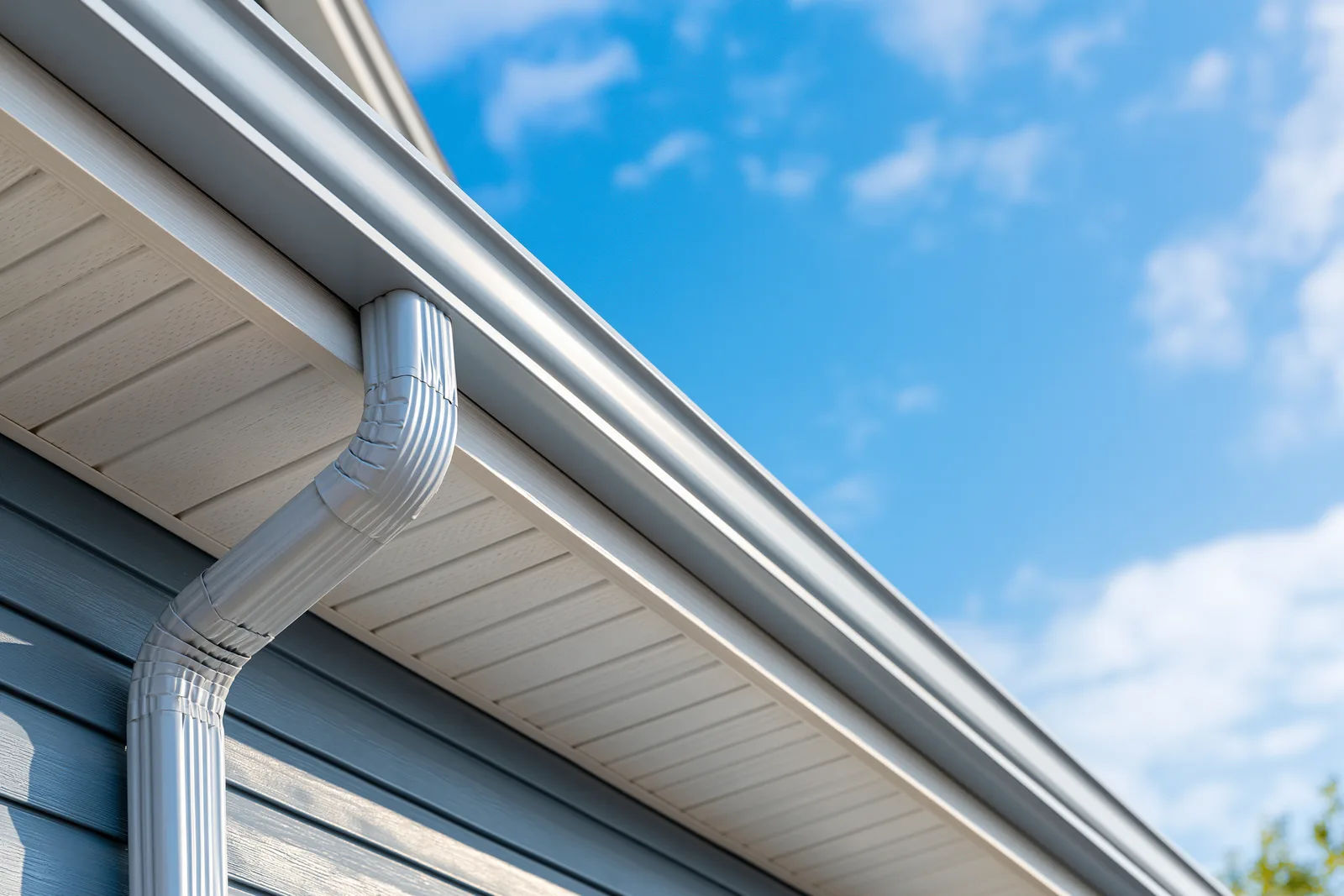
On a sloped roof, water travels over the covering, into valleys and toward the eaves. Where gutters are installed, they collect it and carry it through outlets and downspouts. The ground or connected drainage system must then receive it in a suitable place.
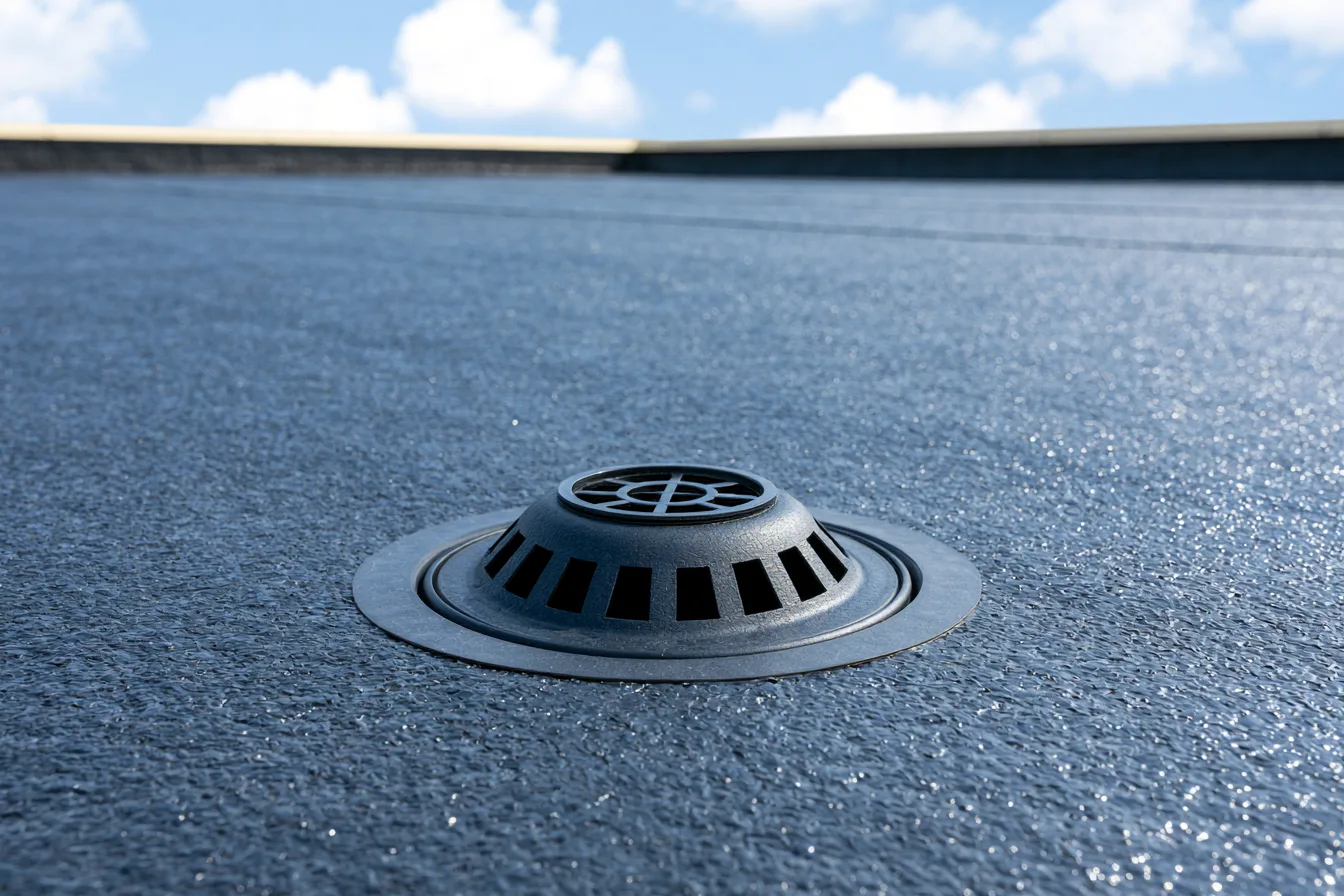
On a low-slope commercial roof, the membrane and insulation layout direct water to drains or scuppers. A blocked outlet, a local depression and an unsuitable drain elevation need different work.
Discuss a low-slope roof concern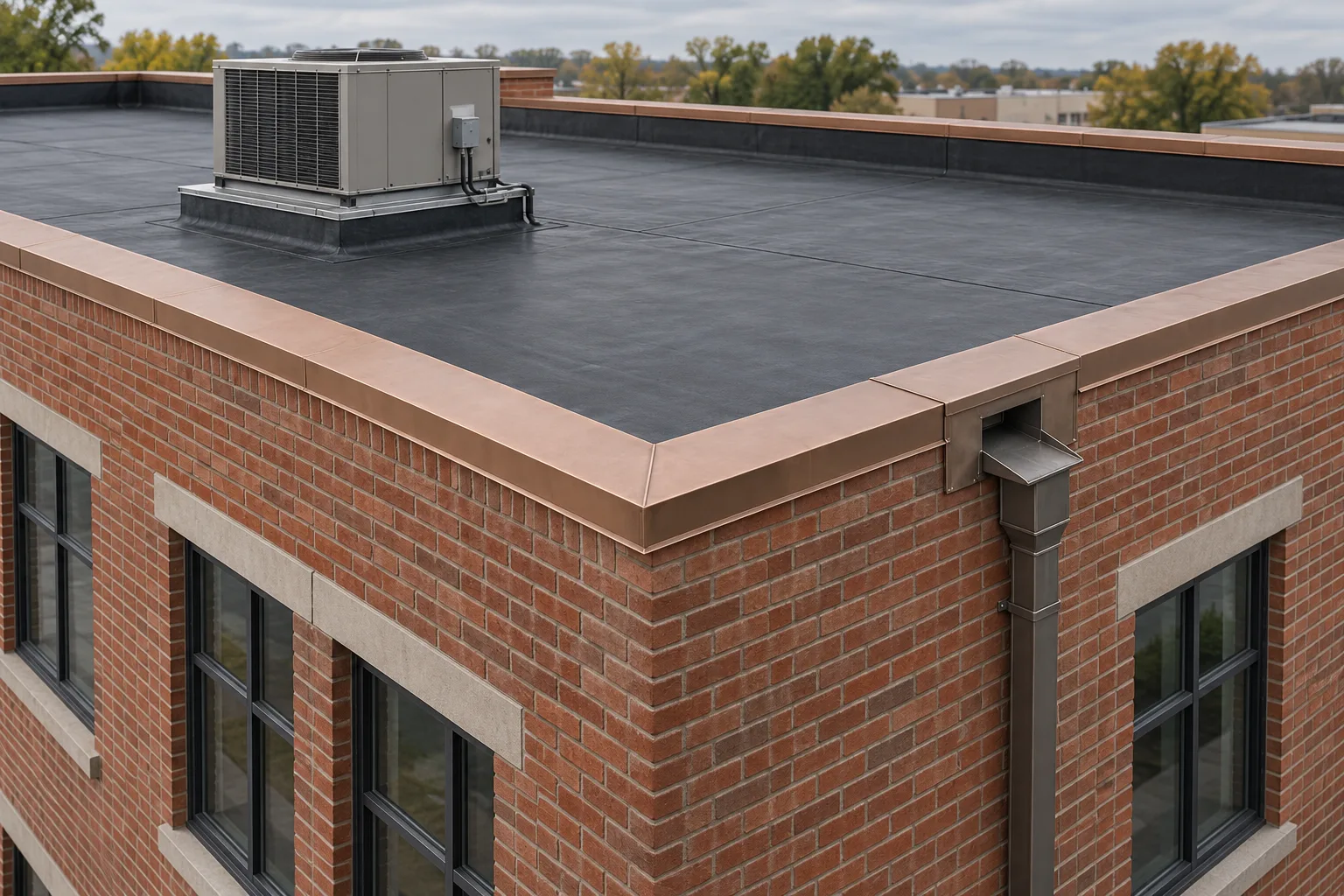
The symptom tells us where to begin, while the roof and outlet condition determine the repair.
Debris, covering damage and open flashing can redirect water before it reaches an outlet.
Gutter pitch, drain or scupper connections and blockage affect how water leaves the roof.
A downspout ending at a poor discharge point can leave water beside the building even when the roof itself is shedding it.
Tell us what you have noticed at the Liberty property. No roof access or diagnosis is needed to ask for help.
Liberty Roof Pros